






Table of Contents
How to know if your relationship is still worth saving?
There comes a moment in every broken relationship when you ask yourself the question: Is there still something to fight for, or is it already gone? And no matter how loud your heart is screaming, logic needs a seat at the table too. Because love, no matter how deep, can’t survive if it’s always drowning in pain, betrayal or disappointment. So, before you decide to stay or walk away from your relationship, it’s important to ask yourself the right questions and be brutally honest with the answers.
Sometimes we confuse emotional exhaustion with clarity. But clarity comes not from running away from pain, but from understanding its root. Is your relationship toxic, or is it simply wounded? Is your partner capable of change, or are you hoping for a miracle that never comes?
Is this a one-time mistake or a pattern?
Let’s be real, people sometimes mess up. One-time mistakes in a relationship, even serious ones like betrayal or dishonesty, can be forgiven and even healed from. But only if they were truly isolated. The keyword here is pattern. One betrayal can be an accident. Two is a red flag. Three is a reality and a habit.
Ask yourself: Has he lied before? Did he cheat before? Or is this truly the first time he crossed a line? Because if you’re wondering how many chances you should give your husband, you might already know the answer. Relationships worth saving don’t make you feel like a detective every day. If he cheated but says he loves you and you want to believe him, first consider: Is he doing it again? Did he do it before?
Many women fall into the trap of “but he cried, he promised, he swore it was the last time.” Words mean nothing if the actions don’t change. A man who keeps repeating the same mistake isn’t making a mistake anymore. He’s making a choice. And you’re making a choice too whether to accept it, excuse it, or end it.
So if you’re thinking „Should I stay or leave my relationship” after betrayal, the pattern tells you everything. One-time betrayal? Maybe there’s something left to build on. Repeated cheating? You’re already living in the rubble.
Does he take full responsibility and show change?
Anyone can say “I’m sorry.” Anyone can cry, beg, or send long messages at 2 am. But very few can carry the weight of what they’ve done and actually change for real. And that’s how you know if your relationship is worth saving or if you should walk away for good.
Does he admit what he did, or does he minimize it? Does he shift the blame to you, or does he own it? Does he understand how deeply he hurt you, or is he just afraid of losing you? There’s a big difference between regret and accountability. One is about his feelings. The other is about your healing.
Real remorse comes with real change. If he lied, does he now show transparency? If he cheated, has he cut all contact with the other woman? Is he doing therapy, reading books, trying to grow? Or is he just saying the right things while waiting for you to “get over it”?
When someone hurts you deeply, especially in a marriage, you have every right to demand proof of change before you offer forgiveness. Because question “Should I stay in my marriage after betrayal?” is not just a moral question. It’s a survival question. Can you emotionally survive staying with someone who refuses to change?
A marriage worth saving is one where both people are willing to do the work. Not just talk about it. Not just apologize. But actually do it day after day. No more secrets, no more games, no more “next times.” If he’s not doing that, then what you’re trying to fix is just a memory, not a real relationship.
When you think “Should I stay or walk away?”, ask yourself this: is he showing up now like the man you always needed him to be? Or are you still waiting, still hoping, still hurting?
Should you forgive him after cheating or lying?
There is no map for heartbreak. No clear direction. Just a woman standing in front of a decision that could change everything. If your husband lied to you, or worse, cheated, then your mind starts spinning with doubts, and your heart aches for clarity. Should you leave your relationship, or is there something still left to rebuild? As a coach who has helped hundreds of women through these crossroads, I can tell you one thing with certainty: you don’t have to rush the answer. But you do owe yourself the truth.
Forgiveness can be a doorway to healing, but only if the foundation you’re stepping onto isn’t already crumbling. If he broke your trust once, it’s natural to ask whether it was a single mistake or the beginning of a long pattern. Many women wonder if they should forgive cheating for example. The answer lies in the details, and in your own emotional capacity to forgive not just him, but what he allowed you to feel in the process.
Emotional affair vs one-time mistake
Not every betrayal carries the same weight. A one-night mistake made in a moment of weakness, perhaps influenced by alcohol, distance, or unresolved tension in the marriage, can be a sign that something needs attention. It’s painful, yes, but not always a death sentence for the relationship. If your husband cheated but takes full accountability, if he ends all contact with the other woman and starts working actively to regain your trust, the relationship might be worth saving. That’s especially true if you still feel emotionally connected and want to fight for your marriage.
But when a betrayal is long-term, such as an emotional affair that lasted months or even years, then the nature of the damage changes entirely. This wasn’t just a slip-up. It was a choice, repeated over time, nurtured in secret. A long-term affair often includes lies, manipulation, and a full emotional bond shared with someone outside the relationship. And that level of betrayal tells a different story about the state of your marriage.
Facing that, women often ask me: Can a marriage survive emotional cheating? The answer is yes, but only if both partners are willing to confront the full truth. That includes asking difficult questions: Why did he seek that connection elsewhere? What emotional needs went unmet? Did he try to fix things with you before crossing the line? And there is one more condition: You still have to love your husband. If you are not sure about that, there is no way, you’ll forgive about something so serious.
When trust is broken on a deep emotional level, it’s not enough to say “I’m sorry.” True remorse involves transparency, accountability, and consistent effort. If your husband refuses to acknowledge the depth of what he did, if he minimizes it as “just texting” or “not serious”, then he’s not ready to repair the damage.
You are not overreacting for drawing a line. You are not heartless for protecting your peace. Whether he cheated once or had an ongoing affair, the way he responds to your pain says more than the betrayal itself.
Can trust be rebuilt after betrayal?
Healing after betrayal is not about going back to the way things were. It’s about creating something entirely new. If your partner is truly sorry, if he takes responsibility without excuses, and if he begins to rebuild your trust with honesty and patience, then you may be able to recover. But this process takes more than promises. It requires action.
Ask yourself if he has he become more transparent with his phone, his whereabouts or his words? Has he offered to attend therapy or take part in rebuilding your emotional bond? If he’s still defensive, evasive, or placing blame on you, then the answer is clear. You’re not in a partnership; you’re in damage control.
Women often wonder how many chances they should give their husband. But that question misses the point. It’s not about the number of chances. It’s about what he does with the one you already gave him. If you stayed after he lied or cheated, and nothing changed, you are not healing but tolerating.
So, before you make decision, look at your partner’s actions now, not just his words. Is he showing remorse or just regret? Is he afraid of losing you or is he committed to becoming someone you can trust again?
Forgiveness is a gift. And gifts should never be demanded. If you feel pressured to “just move on,” that’s not love. That’s emotional manipulation. And if you’re stuck between staying for the kids or staying because you believe in your marriage, remember this: children can feel emotional tension even when no one is yelling. They need a mother who is safe, whole, and respected.
Trust can be rebuilt, but only when both hearts are fully present. And if only one of you is doing the work, you’re not saving the relationship. You’re saving him from the consequences.
When you should not stay – ever
There are moments when walking away from a relationship isn’t just a decision, it’s an act of self-respect. And no matter how deeply you’ve loved someone, your safety, your dignity, and your peace must always come first. It’s not cold to leave someone who keeps hurting you. It’s courageous.
Some relationships leave you confused, questioning whether there’s anything left to fight for. But when fear, control, or harm are present, the question changes. It’s no longer about question “Should I try again?”, but “How do I protect myself?”
Abuse, violence or fear are non-negotiables
If you’re wondering if you should stay with an abusive partner, I think you already know the right answer. When you live in fear of your husband’s moods, his words, or his hands, love has already been replaced by survival. And no woman should have to survive her own relationship.
When your husband hits you, threatens you, or makes you feel unsafe, it’s no longer a matter of working things out, it’s a matter of protecting your life. I’ve worked with women who spent years justifying the abuse because he always said he was sorry. Because he promised he’d never do it again. But he did.
I wish I could tell you that your abusive partner can change, and in rare cases, it happens, but never while you’re still in the line of fire. True change requires distance, deep therapy, and a willingness to own every action. And most importantly, your healing cannot depend on his apology.
If you’re living with emotional abuse in your relationship, like constant criticism, gaslighting, isolation, or silent treatment, the wounds may be invisible, but they cut just as deep. You start to doubt your memory, your instincts, even your worth. You stop recognizing yourself.
When your partner becomes unsafe, you have every right to leave. Not for revenge. Not out of anger. But because love without safety is not love, it’s trauma.
You might be staying because of the children. But kids feel everything. And what they learn from watching is louder than anything you could say. If you’re constantly walking on eggshells in your relationship, they grow up thinking that love is fear, that family means tension, and that silence is normal.
Your story does not have to end in pain. You can protect yourself in a toxic marriage by reaching out, by setting boundaries, by refusing to wait for another apology that changes nothing.
When he repeats the same mistakes over and over
There is another kind of harm that doesn’t involve fists, but slowly eats away at your soul – repeated betrayal in marriage. When he lies again, cheats again. Makes promises he never intends to keep. At first, you forgive, because you believe in who he could be. But over time, you realize this is who he is.
A relationship becomes toxic not because something bad happened once, but because it keeps happening. Over and over. And no matter how much you love him, no matter how many chances you give, nothing changes.
Look at his patterns, not his apologies. Look at how you feel when you’re with him. Do you feel seen, safe, supported? Or do you feel like you’re disappearing?
When a man repeats the same betrayal, your forgiveness turns into self-abandonment. And I know how hard it is to accept that. But choosing to walk away does not mean you failed. It means you stopped trying to fix what was never yours to fix alone.
What to consider before walking away?
Walking away from a relationship is never just about one decision. It’s a process. A slow unraveling of what once felt like a forever home, now covered in doubt, silence, or pain. And even when you’re hurting, there’s a part of you that still hopes it can be saved. But before you say goodbye or stay out of habit it’s worth asking yourself what’s really keeping you there.
Because when you’re unsure whether to stay or leave, what you need most isn’t another opinion. You need clarity. And that starts with two honest questions:
- Are you staying because there’s still love?
- Or are you staying because walking away feels terrifying?
Are you staying for love or for the kids?
For so many women, the idea of leaving feels impossible because of one thing: the children. It’s one of the most common and emotionally loaded questions I hear: “Should I stay in marriage for the kids?”
You love them. You want stability for them. You don’t want to hurt them. And so you stay, even when the love between you and your partner has turned cold, tense, or absent. But here’s the truth: children may not understand adult problems, but they feel everything.
They feel the tension in the air. They watch how you and your husband speak or don’t speak to each other. They absorb your sadness. And when they grow up in a home where love is replaced with distance, they learn that this is what marriage is supposed to look like. Even if you never say a word.
Sometimes staying together for the kids ends up doing more damage than good. Because the home no longer feels safe or warm. And you, trying to hold everything together, slowly lose your own spark. A woman who stays in a relationship for her children but lives in emotional emptiness is teaching them that love is sacrifice, not connection.
Of course, every situation is unique. Some women still feel something for their husband. Others are terrified of starting over. But when you ask yourself if your relationship is worth saving, be honest. Not for them, but for you. You don’t have to leave just because it’s hard. But you shouldn’t stay only because you’re afraid.
Is therapy an option for healing or clarity?
When love feels broken, many women wonder if therapy can help. Can therapy save a marriage? The answer is: go to therapy only if both of you are willing to show up fully. Therapy isn’t a band-aid. It’s a mirror. And what it reflects depends entirely on what you both bring to it.
If your partner dismisses the idea of marriage counseling, refuses to take responsibility, or believes everything is your fault, therapy may not bring healing. In fact, it may show you more clearly what you already know: that you’re doing all the emotional labor alone.
But when a man admits his role, opens up emotionally, and makes space for your pain, something changes. Trust begins to repair. You see him trying, feel him listening, and you remember why you fell in love with him in the first place.
Still, therapy isn’t always about fixing the relationship. Sometimes it’s about finding your own clarity. Individual therapy can help you reconnect with yourself, understand your fears, and decide what kind of love you truly want to receive. If you’re stuck between guilt and hope, therapy may be the safest space to hear your own voice again.
When you feel lost, overwhelmed, or emotionally numb, seeking help doesn’t mean you’ve failed. It means you care enough to understand what’s happening before making a choice you might regret.
When to divorce your husband?
There’s no easy way to admit that your marriage might be over. Especially when you’ve invested years, children, memories, and the best parts of yourself. But sometimes, letting go isn’t failure but a decision rooted in deep self-respect. And if you’re reading this with a heavy heart, wondering whether to stay or finally walk away, know this: you’re not alone, and you’re not weak for asking.
Divorce is never a light decision. But there are moments when trying harder becomes self-betrayal especially when staying starts to cost you more than leaving ever would.
Signs your marriage is over for good
There are red flags and then there are signs so loud they feel impossible to ignore. When you’re stuck in a cycle of pain, confusion, and constant emotional fatigue, you may already know the answer. You’re just hoping something changes before you’re forced to act.
Start by asking yourself if he has he broken your trust repeatedly? Has he shown that he can’t or won’t change?
If your husband continues the same hurtful behaviors after promises to stop, these are not just mistakes. They are patterns. And when a man refuses to change, no matter how many chances you give him, you begin to lose pieces of yourself along the way. You stop laughing like you used to, you second-guess your feelings and shrink to keep the peace.
Many women stay far too long because they’re waiting for clarity that only comes once they leave. They google things like „should I leave my relationship?” or „when to walk away from a relationship” and stay for “one more chance” – hoping, waiting, hurting despite they already know what they should do.
And if you’ve tried everything like conversations, therapy, space, forgiveness, but nothing has shifted, that may be the clearest sign of all. Especially when love is still there, but peace is gone.
Should you divorce or try one more time?
You wonder if giving your husband another chance is naive or hopeful. You should ask yourself: “Is it worth giving him another chance, or am I just afraid to be alone?”
No one else can answer that for you. But here’s what I can tell you after years of coaching women through these moments: one more chance only makes sense if something has actually changed. Not promises or apologies, but real, measurable action.
If he lied to you again, hurt you again, dismissed your pain again and now expects another clean slate, you have every right to say no. Forgiveness is sacred. But should you forgive him for lying over and over again, if it keeps breaking your trust and sanity?
Has he taken real steps to repair the damage? Or is he just trying to avoid the consequences of losing you?
When to give up on your marriage is one of the hardest truths a woman will ever face. But when the emotional burden is crushing, when your tears go unnoticed, when your needs are never met, giving up may no longer be giving up, it may be setting yourself free.
You don’t have to leave angry and you don’t have to hate him. But you’re allowed to choose peace over loyalty to pain.
Make the decision you won’t regret
There comes a moment when silence becomes heavier than any argument. When you realize that staying hurts more than leaving and leaving terrifies you just the same. In these moments, what you need is not another opinion or empty reassurance. What you need is peace. Real peace. The kind that comes from knowing you’ve done all you could, and that whatever happens next, you won’t look back with regret.
How to be sure you’ve tried everything?
If you’re anything like the women I’ve worked with, you’ve likely asked yourself a thousand times: “Have I really tried enough?” I’m sure you have. Maybe you’ve forgiven more than most people would. Maybe you’ve stayed through lies, distance, disappointment, and the slow erosion of your joy, hoping love would find its way back.
Trying everything doesn’t mean sacrificing your mental health, your dignity, or your dreams. It means having the courage to speak the truth, to go to therapy, to look at the facts, not just the feelings. It means checking if he’s really trying to change, not just saying the right words. And if you’ve done all that and nothing has changed, then it might be time to accept that what you’re holding onto is already gone.
Staying with dignity or leaving with peace?
Whether you stay or go, one thing matters most: that you do it with self-respect. You don’t need to prove anything to anyone. Not to your friends, not to your family, not even to your husband. Your life, love and healing belongs to you.
Some women wonder if their relationship is worth saving, even after betrayal. And sometimes it is. But more often than not, what truly destroys trust in a relationship isn’t distance or conflict. It’s deception. And there’s no deception more damaging than infidelity.
Let’s be honest: betrayal is the leading cause of divorce and separation. Whether it’s emotional or physical, cheating shakes the very foundation of a relationship. Because it’s not just about intimacy or messages or secret meetings, but about breaking the emotional contract. It’s about choosing someone else while pretending to still choose you.
And no, cheating is never “just a mistake.” It’s not an accident. It’s a decision. A conscious, deliberate act that says, my needs matter more than your trust. A man who cheats knows exactly what he’s doing and he does it anyway.
But here’s the part most women don’t hear enough: many betrayals could be prevented if they were taught how male psychology actually works. If they were shown the early signs of disconnection, the psychological triggers of loyalty, the subtle shifts in emotional distance that often go unnoticed until it’s too late.
That’s exactly why I wrote my eBook The Loyalty Formula: Keep Him Faithful Forever and Never Be Cheated On Again. It’s a guide every woman should read before she’s sitting in a therapist’s office asking how to forgive a cheating partner, or googling „can a relationship survive cheating.” It’s about understanding what makes a man choose one woman for life, emotionally and physically. It’s about learning the tools to build deep emotional bonding, exclusivity, and commitment that feels natural, not forced.
Because you deserve to be loved with consistency, not doubt. You deserve to be the woman he respects, desires and chooses without question, without secrets, and without comparison.
So whether you’re healing from betrayal, trying to protect what you have, or starting a new relationship you want to get right from the start, The Loyalty Formula is the blueprint I created for you.
You don’t have to wait for the next betrayal to finally feel worthy of more. You can take control now. You can build loyalty by design, not just by hope. Some people think that real love is enough to prevent cheating, but it’s not true. Good relationships require a lot of work from both spouses. And only that effort can ensure your “happily ever after”.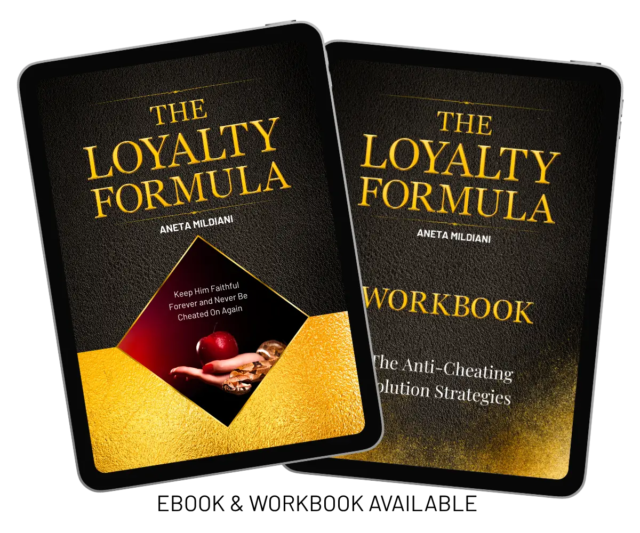
Sources and further reading
- Amato, P.R. and Previti, D., 2003. People’s reasons for divorcing: Gender, social class, the life course, and adjustment. Journal of Family Issues, 24(5), pp.602-626.
- Glass, S.P. and Wright, T.L., 1992. Justifications for extramarital relationships: The association between attitudes, behaviors, and gender. Journal of Sex Research, 29(3), pp.361-387.
- Gottman, J.M. and Silver, N., 2015. The Seven Principles for Making Marriage Work. New York: Harmony Books.
- Kelly, J.B. and Emery, R.E., 2003. Children’s adjustment following divorce: Risk and resilience perspectives. Family Relations, 52(4), pp.352-362.
- Markman, H.J., Rhoades, G.K., Stanley, S.M., Ragan, E.P. and Whitton, S.W., 2010. The premarital communication roots of marital distress and divorce: The first five years of marriage. Journal of Family Psychology, 24(3), pp.289-298.
- Previti, D. and Amato, P.R., 2004. Is infidelity a cause or a consequence of poor marital quality? Journal of Social and Personal Relationships, 21(2), pp.217-230.
- Snyder, D.K., Castellani, A.M. and Whisman, M.A., 2006. Current status and future directions in couple therapy. Annual Review of Psychology, 57, pp.317-344.
Disclaimer
Every article in the Library is prepared with the highest level of diligence. I draw on my professional experience as a relationship coach, cross-check every claim with credible academic sources and review relevant scientific studies to ensure accuracy. I also make efforts to keep each article up to date, revising it whenever I find new evidence or updated research. My commitment is to provide readers with information that is both trustworthy and relevant, so you can read article based on facts, not trends. However, the rapid pace of scientific and clinical developments means that it may not reflect the most current knowledge available. Please also keep in mind, that reading an article does not constitute professional advice, as every situation is unique. If you are facing a serious personal challenge, you should seek guidance from a qualified professional.