






Table of Contents
- Questions to ask before getting married
- Family planning discussions for couples
- How to handle financial issues in a relationship?
- How to divide chores and roles in marriage?
- Relationship boundaries and what counts as cheating?
- How to handle conflict in marriage and deal with family and friends?
- Mutual goals in a marriage and lifestyle compatibility
- How religion and values shape a marriage?
- How to build a strong marriage with honest talks?
- Sources and further reading
Questions to ask before getting married
There is something deeply romantic about the idea of marriage. The promise of a life together, the comfort of knowing you are no longer alone in your decisions, the sense of shared direction. Many women grow up with a vision, sometimes vague, sometimes detailed, of what it will feel like to be someone’s wife. How it will feel to have a home, a family and a sense of certainty in a world that so often feels uncertain.
And yet, the truth is that no wedding dress, no matter how beautiful, has ever saved a woman from the consequences of marrying someone she didn’t truly understand. The ceremony may be sacred, the photographs may be perfect, but if the foundation beneath them is unclear or unspoken, the entire structure becomes fragile, even before the ink has dried on the marriage certificate.
Marriage doesn’t transform a person; it reveals them. It doesn’t erase tension; it amplifies it. It doesn’t fix differences; it forces them to the surface. That is why some of the most critical work in any relationship must happen before the vows are spoken, not after. It is not the absence of love that causes most marriages to crumble, but the absence of clarity about values, expectations and definitions of commitment.
If you are reading this because you are thinking about saying “yes,” or because you have already said it and are beginning to question whether you have asked the right questions, then you are not behind. You are ahead. It takes emotional courage to pause and examine not just whether you love your partner, but whether the life you are building together has a structure that can withstand time, pressure and change.
These are not easy conversations. Many of them require honesty that may feel inconvenient or even frightening. But avoiding them now only delays the consequences. And the women who dare to ask these questions before the honeymoon, are often the ones who later say “I chose this with open eyes. And I’m glad I did.”
Begin not with choosing dresses or rings, but with the truths that too many women only discover after they say “I do.”
Family planning discussions for couples
Becoming a mother, or choosing not to, is one of the most intimate and life-defining decisions any woman will ever face. It affects everything: your identity, your body, your relationship, your career, and your emotional world. And yet, many couples walk down the aisle without ever discussing what they truly believe about parenthood, as if love alone could resolve questions that split families apart every day.
Some women know they want children. Others feel unsure or even quietly convinced that motherhood is not part of their path. But what happens when one partner assumes you’ll “change your mind later”? Or when a man agrees vaguely to “someday,” only to avoid the subject entirely once the honeymoon is over? Love cannot thrive where unspoken assumptions live. And when it comes to raising children, silence is not safety but a seedbed for resentment.
#1: Do you and your partner want children in your marriage and how many?
It is not enough to ask whether you both want children. You must also ask: what kind of parent will you be? What values will you instill? What kind of home will you create? And what will happen if life does not go according to plan?
It is a topic that deserves real presence and space, not just “yes” or “no.” Your partner may say he wants children, but does he understand what that entails emotionally, physically and financially? Does he see fatherhood as a sacred responsibility or a social obligation? And does his timing match yours or is he postponing a future you’re ready to begin?
Wanting different things in this area is not a small difference. It is a fundamental incompatibility and hoping it will resolve itself after marriage is a dangerous form of self-betrayal.
A woman who dreams of family should never have to convince the man beside her to share that dream. And a woman who feels at peace with a childfree life should not feel guilted into motherhood by someone who believes his vision of family should override her own. These are not questions of compromise. They are questions of identity. And without clarity, the emotional cost grows heavier with time.
#2: What parenting style do you plan – strict, traditional or free?
Assuming you both want children, a second layer of complexity begins: what kind of parents will you become? Parenting is not just logistics – it is a transfer of values, discipline, emotional tone and worldview. Will your household be one where obedience is expected without explanation or where children are encouraged to question and explore? Will you agree on screen time, nutrition, education, religious upbringing and boundaries with extended family?
These may seem like details for later, but they are often the very source of deep marital conflict. A woman who believes in gentle, emotionally attuned parenting may find herself shocked to see her husband yelling at a toddler, convinced that firmness equals strength. A man who was raised to see discipline as physical may not understand your need to validate a child’s feelings before correcting them. And if these differences are not addressed early, you may spend the next decade fighting over how to shape the same child you both love.
#3: Will you return to work after having children?
Motherhood changes your relationship with everything: your time, your priorities and often your career. In many cases, it also shifts the balance of power inside a marriage, especially when one partner steps back from professional life to take on more at home. That’s why this question is not just about jobs. It’s about recognition, respect and partnership.
Does your partner expect you to return to work immediately after maternity leave or does he imagine you will stay home full-time? If you do stop working, will he still treat you as an equal decision-maker or will financial control shift the dynamic between you? Will he see your time at home with the children as valuable labor or as something less than “real work”?
Too many women find themselves alone in this negotiation after the baby arrives. When emotions are raw and sleep is scarce then decisions feel urgent. You deserve to talk about it now, with clarity and calm, while you still have room to choose.
Because raising a child is not just about love. It’s about logistics, values, roles and resilience. And your future son or daughter deserves to be raised in a home where those things are not improvised, but consciously built.
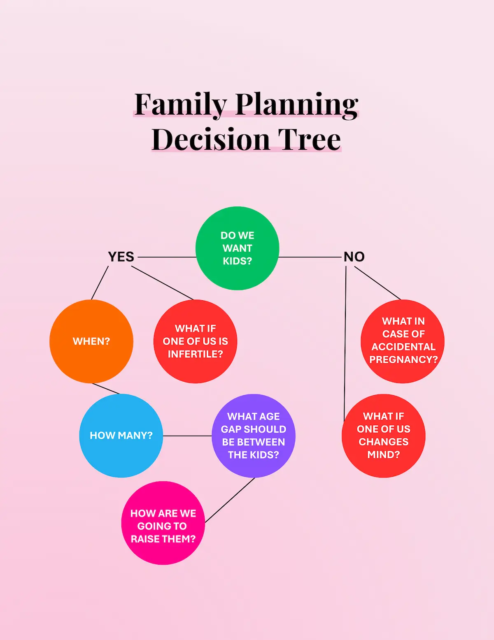 #4: How would you handle infertility – divorce, adoption, IV or no kids at all?
Very few couples are emotionally prepared for the possibility of infertility. It’s not romantic. It’s not something you want to imagine. But you have to admit it – it is real and you can’t now if it won’t happen to you. Ignoring this possibility doesn’t protect your heart. It only increases the shock if it happens. What will you do if, after months or years of trying, you discover that pregnancy is not coming easily? Will you both be open to medical treatment, with all the emotional and physical costs that come with it? Will adoption be on the table and if so, what kind? Or will one of you begin to blame the other, even silently?
This is also where deeper fears emerge: Will your partner stay if you are the one who can’t have children? Will he make you feel “less than” if your body doesn’t cooperate with his dream? Or will he walk beside you with grace, patience and solidarity, no matter what path your future takes?
And if your husband turns out to be infertile, then what will you do? Will you stay? He also deserves clarity on this topic before marriage.
How to handle financial issues in a relationship?
Money has its own language and if you and your future husband speak different dialects, the misunderstanding won’t stay in your bank account. It will seep into your intimacy, your sense of security and your ability to build a shared life that feels fair. For many women, finances are not just about lifestyle. They are about autonomy, dignity and protection. And yet, far too often, conversations about money before marriage are reduced to surface-level questions: “Are you good with saving?” or “Do we want a joint account?”
But those questions barely scratch the surface. Financial compatibility runs much deeper. It touches your beliefs about gender roles, provision, sacrifice, power and long-term risk. It determines how safe you’ll feel if you leave the workforce, how respected you’ll feel if you need support and how protected you’ll be if life doesn’t go according to plan. That’s why financial roles and expectations deserve serious, detailed discussion, not vague hopes or blind trust.
#5: Will your husband be the main provider or will you split expanses 50/50?
Some women dream of a traditional marriage, where their husband takes full financial responsibility for the family. Others envision equal contribution. Neither approach is wrong, but assuming you’re on the same page without confirming it is dangerous.
If your partner plans to provide for you, does that mean he will fully cover all household needs including time when you’re pregnant, raising small children or stepping back from work for health or caregiving reasons? Will he support you emotionally as well as financially if you take time away from your career? And if you do split everything, does that include labor at home or will you end up paying half while doing most of the unpaid caregiving?
Now ask the harder question: what happens if he loses his job? Or becomes seriously ill? Or dies unexpectedly? Have you discussed life insurance, long-term savings or how you would be protected in his absence? Will there be a safety net for you and your future children or will you be expected to “figure it out” on your own?
Provision isn’t just about today. It’s about who carries the responsibility for tomorrow’s unknowns.
#6: Will you use a joint bank account or separate accounts in marriage?
Financial logistics shape emotional dynamics. Will you and your husband have one account or two? Will you both have access to the same funds or will you need to ask before spending on yourself? Will he monitor your purchases or trust your decisions? And more subtly – will you feel like an equal participant in the household economy or like someone receiving approval for basic needs?
Some women choose to maintain a private account even in traditional arrangements, as a form of personal autonomy or protection. Others find empowerment in full financial unity. The key isn’t the structure, but the dynamic it creates. If he earns more, does he treat your contribution as equally valuable? And if you take on invisible labor like child-rearing, managing the home, emotional support – will that be honored in the way finances are handled?
A shared life without a shared financial philosophy often leads to resentment. Don’t wait to “see how it goes.” Decide now what kind of system you both believe in and why.
#7: Will your husband cover luxuries or only basic needs?
Many women hear the words “I’ll take care of you” and assume that includes more than survival. But the definition of care varies wildly. For some men, it means rent, groceries and bills. For others, it includes vacations, self-care, gifts, beauty routines, books, therapy and all the things that make a woman feel alive and well, not just functional.
If your future husband plans to provide, ask if he will invest in your quality of life or only your survival? Will he be generous with you the way he is with himself or will you feel guilty for every purchase beyond the absolute minimum?
Provision without dignity feels like charity. If he expects you to dedicate your time, body and emotional energy to the family, he should also expect to support the life that makes you feel like yourself, not a dependent beggar.
And if he only supports the basics, have you agreed on how the rest will be funded? Will you be expected to “earn” your indulgences on the side or will they simply disappear?
#8: Are our spending habits compatible for marriage?
Even if your structural approach to finances is aligned, your spending psychology might not be. One of you might find comfort in planning every expense. The other might spend freely when emotionally stressed. These patterns are deeply rooted in childhood experience, personality and beliefs about scarcity or abundance.
If your partner avoids financial conversations, views budgeting as restrictive or dismisses your concerns about long-term planning – take that seriously. Emotional avoidance around money doesn’t disappear after marriage. It usually gets worse under pressure.
You don’t have to be the same. But you must be aware. Are you both willing to sit down regularly and talk about spending, saving, investing and goals? Can you have honest conversations about debt, financial fears and boundaries with family members who ask for money? Will decisions be made together or by whoever earns more?
Because in the end, money in marriage is never neutral. It will either become a channel for mutual trust and shared purpose or a hidden battleground, where power shifts and neither of you feels fully seen.
How to divide chores and roles in marriage?
Living together in marriage is not just about love. In everyday life it’s mostly about logistics, rhythm and the daily dance of responsibilities that either unite or divide a couple over time. Before the wedding, most women imagine shared dinners, affectionate routines and partnership in everyday life. But reality has a way of revealing expectations that were never clearly spoken. And when those expectations clash with your values or sense of fairness, love alone won’t be enough to hold the peace.
Roles in marriage defining who does what, how often and with what level of appreciation, are deeply shaped by family upbringing, culture, religion and past relationships. You may assume that what feels normal to you also feels obvious to him. But what if your definition of “helping out” is his definition of “your job”? What if he believes that housework is feminine and you believe that cleaning after yourself is simply adult behavior?
It’s not about who’s right. It’s about what you’re willing to agree on before resentment builds.
#9: How will you divide house chores in marriage?
At the heart of daily life is the rhythm of domestic labor and someone will be doing it. Will it be you, by default? Will your partner expect meals at certain times, laundry always done, floors always clean without ever discussing how those things are supposed to happen? Or will he contribute actively, consistently and without needing praise?
Maybe you both work full-time. Maybe you plan to stay home with children. Maybe one of you travels a lot. Regardless of the structure, the key question is: who carries the weight of the invisible labor?
Invisible labor includes things like remembering to replace toilet paper, scheduling dentist appointments, organizing holiday meals, folding clean laundry and noticing what’s missing from the fridge. Often, these tasks are assumed to “just happen” and more often than not, it’s the woman who silently takes them on.
And if neither of you wants to carry the full load, then what? Is hiring a housekeeper something you’ve discussed? Are you both open to outsourcing part of the domestic work so that your relationship doesn’t become a battle over dishes? Delegating is not failure. For many modern couples, it is a strategy for protecting emotional intimacy from the exhaustion of running a household like a second full-time job.
What matters is not who does what, but that it’s defined, respected and revisited over time. Assumptions will break you. Agreements will protect you.
#10: Does your partner want a traditional wife or prefers modern roles in a marriage?
Marriage exposes the real beliefs people carry about gender. Often beliefs they cannot articulate until they are challenged. Your partner may seem progressive in conversation, but once married, might expect you to serve him dinner every night, care for the children without help and stay cheerful no matter how tired you feel. You may be surprised to discover that behind his love for you lies an image of what a “good wife” should be and it may not match who you are.
Does he believe that the man leads and the woman supports in all areas? Or does he see marriage as a partnership, where leadership is mutual and decisions are shared? Will he honor your ambition, voice and your inner authority or expect quiet compliance masked as femininity?
None of these roles are inherently wrong. Some women truly desire a traditional structure. Others thrive in balanced, co-led relationships. The danger is not in the choice, but in not knowing you made one.
#11: What does respect and leadership look like for you in a marriage?
Leadership is not dominance. And respect is not obedience. But when gender roles are left undefined, these words often take on unhealthy interpretations. Who makes final decisions in your relationship and why? Do you both feel equally heard, even if you disagree? Does your partner expect to be “the head” of the family and if so, does he understand what kind of humility, responsibility and emotional intelligence that truly requires?
Being led is not the same as being controlled. And being respected is not the same as being silenced. If your partner uses words like “submission” or “traditional order” does he also embody the kind of love that protects, uplifts and sacrifices? Does his leadership make you feel safe or small?
These are not questions for conflict. They are questions for clarity. Because one day, it will matter who disciplines the children, who handles a family crisis or who decides whether you move across the country. And if respect hasn’t been defined by both of you, someone will end up feeling invisible.
Relationship boundaries and what counts as cheating?
Trust is not a declaration. It’s something you feel in your nervous system when your partner consistently shows you that you are safe with him, even when you’re not watching. In marriage, trust will be tested not just in moments of crisis, but in everyday choices: who he messages, how he talks about you in your absence, where his attention goes when you’re tired, unavailable or emotionally distant for a while.
But long before these moments ever happen, you must ask a much deeper question: what does loyalty mean to each of you and where are the lines neither of you will cross?
Many couples assume they agree on this. But in reality, they don’t. For one person, loyalty is about physical exclusivity. For another, it’s about emotional transparency. For some, jealousy arises from proximity; for others, from secrecy. And in the absence of clearly drawn boundaries, even the most loving partners can end up wounding each other without even realizing why.
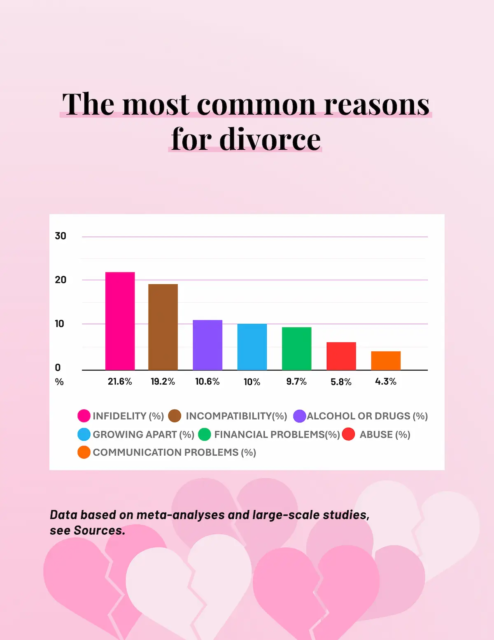
#12: Do you agree on boundaries for emotional and physical cheating?
Cheating is not always a naked body. Sometimes, it’s a hidden thought, a message deleted before you get home, a connection maintained “harmlessly” over time, even though your intuition says otherwise. Many men believe that as long as there’s no touch, there’s no betrayal. But for most women, emotional exclusivity is just as sacred, and sometimes, even more.
So, what counts as cheating in your relationship? Is it only physical intimacy or does it include secret conversations, flirty jokes, long-standing emotional closeness with someone else? Does your partner understand that emotional loyalty is about presence, responsiveness and choosing to protect the bond even when no one is watching?
This boundary cannot remain implicit. Because if you don’t define cheating together, one of you will eventually feel betrayed and the other will claim innocence.
#13: Is flirting online or liking photos cheating in marriage?
In the digital age, micro-cheating is everywhere. A like here, a wink there, a comment with too much subtext. All of it can be brushed off as “nothing,” but if your stomach sinks every time it happens, then it’s not nothing. For many women, digital behavior reveals more than physical action. It shows where a man’s attention lingers when he thinks it’s harmless.
Does your partner follow women he finds attractive on social media? Does he interact with content in ways that make you feel uncomfortable, but hesitant to speak up for fear of sounding insecure? And if you’ve ever asked him to stop, did he listen or did he accuse you of controlling him?
Your feelings about these interactions are valid. The world may be more permissive than ever, but that doesn’t mean your marriage should be. Every couple has the right to define what is sacred and what is not.
#14: Is it OK to have close friends of the opposite sex when married?
This is one of the most polarizing questions in modern relationships and yet, most couples never discuss it until a problem arises. Can your husband maintain deep friendships with women who are not his family? Can you have emotionally close male friends and if so, under what conditions? What role does transparency play in those dynamics?
While it’s true that friendships across gender lines can be platonic, it’s also true and well-documented that many affairs begin with “just friends.” Emotional intimacy doesn’t always look wrong in its beginning. It starts with vulnerability, consistent access and the quiet knowledge that someone else understands you when your partner doesn’t. But in the moment of weakness, for example when you have an argument in your relationship, it can escalate.
If either of you has had previous emotional or physical relationships with someone you now call “just a friend,” this is especially important. Are you both willing to place the marriage above nostalgia, convenience or comfort with the opposite sex? And are you able to name when a boundary has become too thin, even if no one has technically done anything wrong?
Friendships are beautiful. But in marriage, they must be stewarded with care. Not just for your own emotional protection, but for the dignity of the person you promised to honor.
How to handle conflict in marriage and deal with family and friends?
It’s not love that determines the success of a marriage, it’s how the couple handles the inevitable moments when love is not enough. Disagreements, stress or emotional distance are not signs of failure. They are signs of reality. And in that reality, there is one question that becomes more important than any other: how do you fight and who gets involved when you do?
Conflict is not dangerous in itself. But the way a couple responds to conflict determines whether trust deepens or erodes. Some people shut down. Others explode. Some need space, while others need connection. But unless these patterns are made conscious and discussed before the wedding, they will become battlegrounds after it, especially when external voices are added to the mix.
And they will be. Mothers, sisters, aunts, best friends – they all have opinions. And if your marriage doesn’t have clear boundaries, their opinions will start to carry weight in places they don’t belong.
#15: Should marriage problems be kept private or shared with family?
When conflict arises between you and your husband, who gets access to that information? Are you both committed to solving problems within the relationship first or do you default to sharing frustrations with family, hoping for support that sometimes turns into bias?
Many women confide in their mothers or sisters when they feel hurt. It’s natural. But every time you do, you shape how your family sees your husband and those perceptions are rarely reversible. Meanwhile, if your husband turns to his family for validation during conflict, you may feel ambushed, ganged up on, or misunderstood.
Of course, there are moments when external support is necessary, especially in cases of emotional neglect, ongoing disrespect, or crisis. But that support must be chosen carefully, not triggered impulsively. Because some issues require privacy to heal. And some relationships do not survive when too many people are invited into their most vulnerable spaces.
#16: What boundaries should you set with in-laws?
Family dynamics don’t stop at the wedding. In fact, they often become louder. Your partner’s parents may expect access to your time, your home, your children and even your decisions. They may have strong opinions about how you live, what you believe or how you behave as a wife. The question is not whether they will have opinions, but whether those opinions will shape your life.
Does your future husband know how to protect your space from his family’s intrusion? Can he lovingly but firmly say “no” to his mother? Can you set boundaries with your own relatives, even if they’re generous, emotionally close, or financially helpful?
A marriage without defined borders becomes a playground for family drama. The strongest couples are not those who isolate themselves, but those who choose each other first, every time, especially when it’s inconvenient.
#17: How much say should mother-in-law have in your marriage?
No one wants to admit they’re marrying a man who hasn’t emotionally separated from his parents. But this issue is more common than you might think. Some men defer to their fathers on every financial decision. Others let their mothers speak for them in matters of childcare, holidays, or discipline. At first, it may seem like “he’s just close to his family.” Over time, it can begin to feel like you married a man and his mother.
If your future husband consults his parents before he consults you, then take that seriously. Don’t ignore if he dismisses your needs to protect their comfort. If he cannot tell them “We’ve decided to do it differently” without guilt or anger, then ask yourself what it will be like to raise children together.
A man who cannot separate emotionally from his parents will never be fully present as a husband. That doesn’t mean cutting off his family. It means choosing adult autonomy and choosing you.
Mutual goals in a marriage and lifestyle compatibility
Big dreams are beautiful. But it’s the small, daily decisions about where you’ll live or how you’ll spend your evenings, that shape the emotional climate of a marriage. And while love might inspire you to say “wherever you are is home,” the reality is that incompatible visions of lifestyle and location can create long-term tension that no amount of affection can soothe.
It’s not just about whether you like the same furniture or prefer the same kind of view from your window. It’s about rhythm, environment, access to community and long-term personal goals. One of you may crave the stability of staying close to family. The other may dream of living abroad. One of you may feel happiest in a quiet house with a garden. The other may find that kind of life suffocating.
And if these preferences are not discussed, clarified and sometimes even negotiated, then eventually someone will feel out of place in the very life they helped build.
#18: Do you want to buy a house or apartment after marriage?
At first glance, this may seem like a practical detail. But it’s more than that. It’s a reflection of how each of you experiences peace, identity and safety. Do you imagine yourself in a suburban home with children playing in the yard or do you feel most alive in the pulse of a city apartment near your favorite coffee shop?
Some women long for quiet spaces, morning rituals in the garden and room to create. Others thrive on culture, movement and the convenience of being close to everything. And while it’s possible to compromise, it’s not possible to live two lives at once. So, before you say “yes” to forever, make sure you’re also saying “yes” to the actual environment you’ll be waking up in every day.
This is especially important if one of you has strong ties to your hometown or a deeply rooted vision of “home” that doesn’t match your partner’s. Because if you picture different futures, someone will eventually start grieving the life that never got built.
#19: Do you agree on moving abroad after marriage if needed?
Modern couples often face a choice that generations before didn’t: Do we stay near what’s familiar or do we build something completely new, somewhere far away? This can be exciting, but it can also be a silent wedge, especially if one partner is deeply attached to staying near family, while the other sees opportunity across borders.
If your partner wants to emigrate, is that a dream you share or a sacrifice you would quietly resent? Are you willing to leave your support system behind for the sake of his career, his citizenship goals, or a “fresh start”? Or do you envision raising your children near their grandparents, preserving language, roots and tradition?
Living abroad sounds adventurous until you’re giving birth in a foreign hospital, navigating visas, or spending Christmas without the people who raised you. These questions don’t have simple answers. But they must be asked now, not later.
#20: Do you have the same vision for daily life in marriage?
Finally, it comes down to this: not the wedding, not the honeymoon, but the Tuesday mornings. The Wednesday evenings. The long Sundays where nothing special happens. What does your ideal daily life look like and does it match his?
Do you both want the same level of social interaction, structure, spiritual engagement or quiet time? Are your visions of rest compatible or will one of you always feel pulled along by the other’s energy? Does he dream of a fast-paced lifestyle, packed schedules and external success while you crave rhythm, ritual and emotional space?
These are not philosophical differences. They’re practical. If one of you constantly compromises to meet the other’s speed or silence, you may slowly start to lose touch with yourself.
Marriage is not just about who you love. It’s about what kind of life you build around that love and whether you can both live in it, fully and freely.
How religion and values shape a marriage?
When a couple shares a deep connection, it’s easy to assume that the most difficult conversations are behind them. But even the strongest emotional bond can unravel when values begin to diverge. And some of the most emotionally loaded values are the ones rooted in faith, culture and inherited beliefs about how life should be lived.
These topics are often avoided at the start. Many couples gloss over them in the name of tolerance, love or optimism. But shared values are not about agreeing on everything. They are about knowing where your differences live and whether those differences can be navigated without resentment, shame, or forced silence.
Before marriage, it’s essential to ask not only what your partner believes, but how those beliefs will shape your daily life together. Because it’s one thing to respect each other’s worldview and to live under the rules of one.
#21: Are your religious beliefs and cultural values a good match?
Do you and your partner practice the same religion or approach it in similar ways? Are there rituals, obligations, or spiritual practices that will affect your schedule, diet, dress, or lifestyle? If your families come from different traditions, how will holidays, ceremonies and celebrations be handled?
You don’t have to match in every detail. But you do need to agree on how much space each tradition will take in your shared life. Will you attend religious services together? Will you raise your children in one tradition or both? Will either of you feel compromised, silenced, or unacknowledged in the process?
Some people take a flexible approach to spirituality. Others find deep identity and purpose in their religious structure. Marrying someone whose spiritual rhythm clashes with your own is a decision that must be made with full awareness of what you’re choosing.
#22: Will your holiday celebrations match in marriage?
Beyond formal beliefs, everyday life is filled with traditions: annual celebrations, weekly rituals, sacred times of the year. Will these be shared or separate? Will your home reflect both of your heritages equally? Will one of you have to make compromises each year about how, when and what is celebrated?
And even deeper – what do these moments mean to each of you emotionally? For some women, certain holidays symbolize family, community and sacred connection. For others, they may carry emotional baggage or hold little significance. If one of you finds great meaning in a holiday that the other sees as optional or irrelevant, will that be met with respect or dismissal?
These questions are not about checking boxes. They are about honoring what anchors your identity and ensuring that neither of you has to trade that identity for harmony.
#23: Do you both agree on things like modesty, alcohol and lifestyle boundaries?
Cultural and spiritual backgrounds don’t just shape beliefs, they shape behavior. Will your partner expect you to dress a certain way, limit your social activity, or avoid places he finds inappropriate? Does he drink alcohol? Smoke? Attend social events that challenge your values?
Will he respect your boundaries if you choose not to participate in certain activities or will you be pressured to adapt? And in the opposite direction: will your own lifestyle habits trigger discomfort, disapproval, or silent tension in him?
Marriage is a space where freedom and respect must coexist. If either of you feels constantly judged, corrected, or made to explain your personal boundaries, the emotional atmosphere will shift from acceptance to anxiety.
You deserve a relationship where your way of being in the world is not just tolerated, but understood and where values are not weapons, but bridges.
How to build a strong marriage with honest talks?
Marriage is not a finish line. It’s a beginning and like any beginning, it demands structure. Not fantasy, not silence, not assumptions. A wedding can be romantic. But a marriage must be built with your eyes wide open. Because while love may be the reason you start, clarity is the reason you last.
And clarity doesn’t come from guessing. It comes from asking again and again. Even when the answers are awkward or when you worry it might scare him away. Even when part of you wants to keep the peace instead of challenging the moment. Because the real danger is not what you’ll discover if you ask. The danger is what you’ll never know if you don’t.
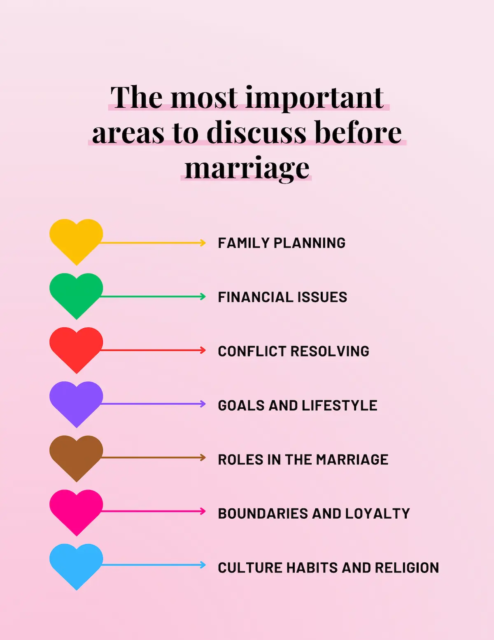
The conversations about children, money, roles, values, fidelity, family are not optional. They are the very blueprint of your future life. Skipping them means gambling your safety on charm, chemistry, or a vague belief that “we’ll figure it out later.” But later is where heartbreak lives. Later is where resentment grows. And later is where many women find themselves shocked by a man who didn’t change. He just simply wasn’t asked the right questions in time.
If you’ve already had these talks and you know where he stands and you’re aligned, then you’ve done something most couples never dare to do. You’ve stepped into emotional adulthood.
And now, there’s only one question left.
Did he already ask: „Will you marry me?”
I’m talking about this because for many women, this is where the story stalls. Not because there’s no love. Not because the relationship isn’t real. But because modern men often delay the commitment step far beyond what feels natural for the woman beside them. You may feel ready, certain and emotionally grounded. You may know what kind of life you want and that he is “The One.” But he’s still “thinking,” “waiting,” or “not quite there yet.” And you’re left wondering how long is too long.
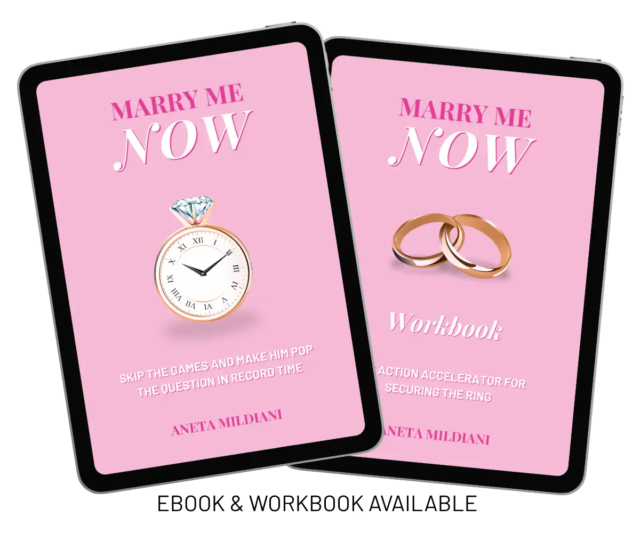
That’s exactly why I wrote eBook Marry Me Now. Skip the Games and Make Him Pop the Question in Record Time. Not to manipulate men, but to guide women how to help them make that important step. To give you the tools to move from silent waiting to subtle direction. This eBook is not about pressure. It’s about emotional strategy, confidence and the psychology behind why some men take years and others propose in months.
Inside, I show you how to recognize the signals that he’s emotionally ready (even if he doesn’t know it yet), how to create a dynamic where commitment becomes the obvious next step and how to protect your heart and your time without ultimatums or games.
Because when you’ve done the work, when you’ve asked the questions, when you know not the fantasy, but the real, complex, beautiful version of your man, then waiting in silence no longer feels like love. It feels like limbo.
And you were never meant to stay in limbo. As a woman, you are meant to build.
So if you’re ready to take the next step and you want to make sure he is too, then this guide was made for you.
Sources and further reading
- Amato, P.R. and Previti, D. (2003) People’s reasons for divorcing: Gender, social class, the life course, and adjustment. Journal of Family Issues, 24(5), 602–626.
- Carroll, J.S., Willoughby, B.J. and Badger, S., 2012. Marriage Preparation in the 21st Century: Emerging Trends and Critical Issues. New York: Routledge.
- Larson, J.H. and Holman, T.B., 1994. Premarital predictors of marital quality and stability. Family Relations, 43(2), pp.228–237.
- Stanley, S.M., Rhoades, G.K. and Markman, H.J., 2006. Sliding versus deciding: Inertia and the premarital cohabitation effect. Family Relations, 55(4), pp.499–509.
- Wilcox, W.B. and Dew, J., 2012. The Date Night Opportunity: What Does Couple Time Tell Us About the Potential Value of Date Nights? Charlottesville: National Marriage Project, University of Virginia.
Disclaimer
Every article in the Library is prepared with the highest level of diligence. I draw on my professional experience as a relationship coach, cross-check every claim with credible academic sources and review relevant scientific studies to ensure accuracy. I also make efforts to keep each article up to date, revising it whenever I find new evidence or updated research. My commitment is to provide readers with information that is both trustworthy and relevant, so you can read article based on facts, not trends. However, the rapid pace of scientific and clinical developments means that it may not reflect the most current knowledge available. Please also keep in mind, that reading an article does not constitute professional advice, as every situation is unique. If you are facing a serious personal challenge, you should seek guidance from a qualified professional.